


How to care for your bike properly: washing, lubrication and maintenance
How do you clean and lubricate a bicycle properly? We’ll advise you how to look after the chain, fork, shock and dropper seatpost and extend the life of your components.
Regular bicycle maintenance is the foundation of a long service life, reliability and trouble-free operation. You don’t have to be an experienced mechanic to give your bike basic care. Just follow a few simple rules that will help you prevent unnecessary component wear and costly repairs.
Basic rule: A clean and properly maintained bike not only works better, it also lasts longer. The most important things are regular cleaning, correct chain lubrication and care for the bike’s moving parts.
1. Washing your bike – forget the pressure washer
After riding in mud, dust or wet conditions, it’s a good idea to clean your bike. For routine washing, use only running water, a soft cloth or a gentle brush. Don’t remove dried-on dirt by force, so you don’t scratch the paint or damage the surface of individual components.
Don’t use a high-pressure cleaner (pressure washer) for routine washing. A strong jet of water can force dirt and water into bearings, seals and other sensitive parts of the bike.
Exception for really heavy soiling: If you decide to use a pressure washer exceptionally, limit it strictly to the bike frame. Use the lowest possible pressure, a wide spray pattern and sufficient distance. Never aim at bearings (bottom bracket and headset, wheel hubs), suspension pivots, seals, the fork, shock, dropper seatpost or the electric drive.
After washing, dry the bike with a soft cloth. Don’t forget the chain and metal parts in particular, where water could remain and corrosion could then develop.
2. Chain lubrication – less is sometimes more
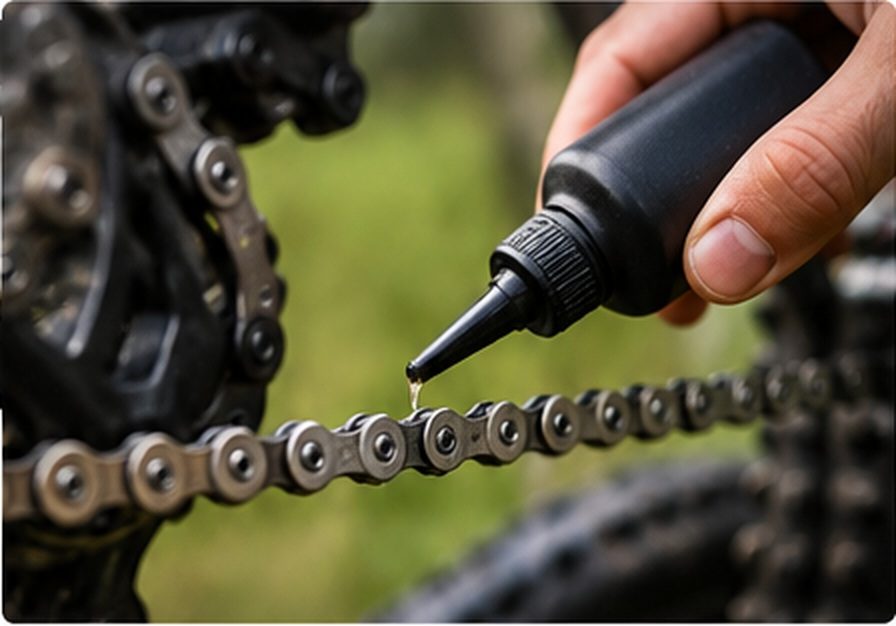
The chain is among the most heavily stressed parts of a bicycle, and its regular maintenance has a crucial impact on the service life of the entire drivetrain. A dirty or poorly lubricated chain increases friction, wears faster and gradually damages the cassette and chainrings as well.
We recommend thoroughly cleaning and lubricating the chain roughly every 150 km. However, the interval can vary significantly depending on the conditions you ride in. After riding in rain, mud or a dusty environment, maintenance will be needed more often.
How to lubricate the chain correctly?
First, you need to wash the chain thoroughly and remove old lubricant and all dirt. Use a product designed specifically for cleaning a bicycle chain. After cleaning, let the chain dry thoroughly.
Then apply a special lubricant for bicycle chains. Apply the lubricant gradually to individual links while slowly turning the cranks backwards. After application, let the lubricant penetrate into the links according to the manufacturer’s instructions and thoroughly wipe off any excess lubricant with a dry cloth.
Watch out for unsuitable lubricants! Use only lubricants intended for bicycles. Avoid universal products, for example standard WD-40, which are not intended as a replacement for specialised chain lubricant. Also choose the correct type of lubricant according to the conditions you ride in most often – you need different properties in dry conditions than in wet or muddy environments.
3. Caring for the fork, shock and dropper seatpost
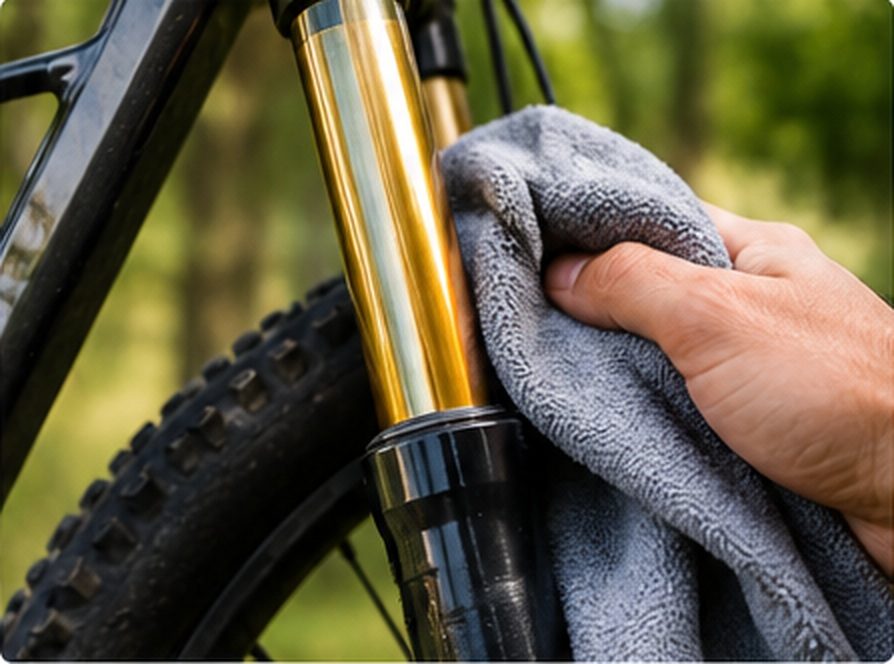
If your bike has a suspension fork, rear shock or dropper seatpost, don’t forget their regular maintenance. Dirt deposited on the stanchions and around the sealing rings can gradually cause increased friction and seal wear.
After riding, remove dust and dirt from the fork stanchions, the shock shaft and the dropper seatpost using a clean, soft and dry cloth.
For the fork and dropper seatpost, you can use a small amount of a silicone product intended for caring for sealing rings, according to the recommendations of the specific component manufacturer. Apply the product only to the sealing ring, then compress the suspension a few times or insert the seatpost and thoroughly wipe off any excess until dry.
Do not lubricate the rear shock externally. Its lubrication is ensured by the internal system and regular servicing. Simply wipe any traces of oil on the shock body or shaft with a clean cloth.
Important: Never use a high-pressure cleaner on suspension. Also regularly check the condition of the seals and any oil leaks. If the fork, shock or dropper seatpost is not working properly, entrust the inspection to a professional service centre.
4. Don’t forget the brakes and moving parts
When cleaning your bike, also pay attention to the brakes, gears and other moving parts. Brake rotors, brake pads and the braking surfaces of rims must not come into contact with oil or lubricant. Even a small amount of lubricant can significantly reduce braking performance.
Also regularly check the condition of brake pads and other components. Watch out for unusual noises, play or changes in the bike’s behaviour. Early detection of a problem can prevent damage to other components.
5. When should you entrust your bike to a professional service centre?
Even with regular home maintenance, every bicycle needs a professional check from time to time. Regular servicing helps identify worn components, hidden faults and issues you might not notice during routine cleaning.
The interval for service inspections depends on how often you use the bike, your riding style and the conditions you ride in. For mountain bikes and e-bikes used in demanding terrain, servicing may be needed more often. For suspension, also follow the service intervals recommended by the manufacturer of the specific component.
Our recommendation: Don’t wait until a problem appears. Regular care and timely servicing are always easier and usually cheaper than dealing with a fault caused by long-term neglected maintenance.
Give your bike the right care and it will reward you!
You don’t have to be a professional mechanic to keep your bike in good condition. A few basic habits, regular cleaning and correct use of lubricants are enough. And if you’re not sure about maintenance or adjustment, our service is available to you.